Law & Regulations

A legal professional is examining a dashboard on the computer, full of laws, regulations, and guidelines to ensure she is in compliance with the law. Healthcare fraud concept.

DOJ-OIG Guidelines

The DOJ-OIG Guidelines establish frameworks for detecting and deterring fraud, waste, and abuse in federal healthcare programs. They provide voluntary compliance guidance to help healthcare entities design effective programs that prevent violations of the False Claims Act, Anti-Kickback Statute, and other federal laws. The General Compliance Program Guidance (GCPG) covers seven core elements of an […]


DOJ-OIG Guidelines Read More »

A judge's gavel sits on a legal bench in front of an American flag. Healthcare fraud concept.

State Level False Claims Acts

More than 30 states have enacted False Claims Acts, but their strength varies dramatically. California offers the nation’s largest whistleblower reward—up to 50% of total recovery, far exceeding the federal 15-30% range—and covers fraud against private insurers. New York has recovered over $4 billion since 2011 and applies its FCA broadly to “almost any situation

State Level False Claims Acts Read More »

HIPAA & Whistleblowing

For whistleblowers in healthcare, few topics cause more confusion or concern than HIPAA — the Health Insurance Portability and Accountability Act. While HIPAA protects patient privacy, it also includes specific exceptions that allow whistleblowers to report fraud and abuse lawfully. Under HIPAA, healthcare workers are generally prohibited from disclosing protected health information (PHI). However, 45

HIPAA & Whistleblowing Read More »

Affordable Care Act Fraud Provisions (2010)

Beyond expanding coverage, the Affordable Care Act (ACA) reshaped healthcare fraud enforcement. At Barrett Johnston, we see its fraud provisions as some of the most impactful reforms in modern healthcare law. The ACA strengthened the False Claims Act (FCA) and the Anti-Kickback Statute (AKS), clarifying that any claim tainted by a kickback is automatically a

Affordable Care Act Fraud Provisions (2010) Read More »

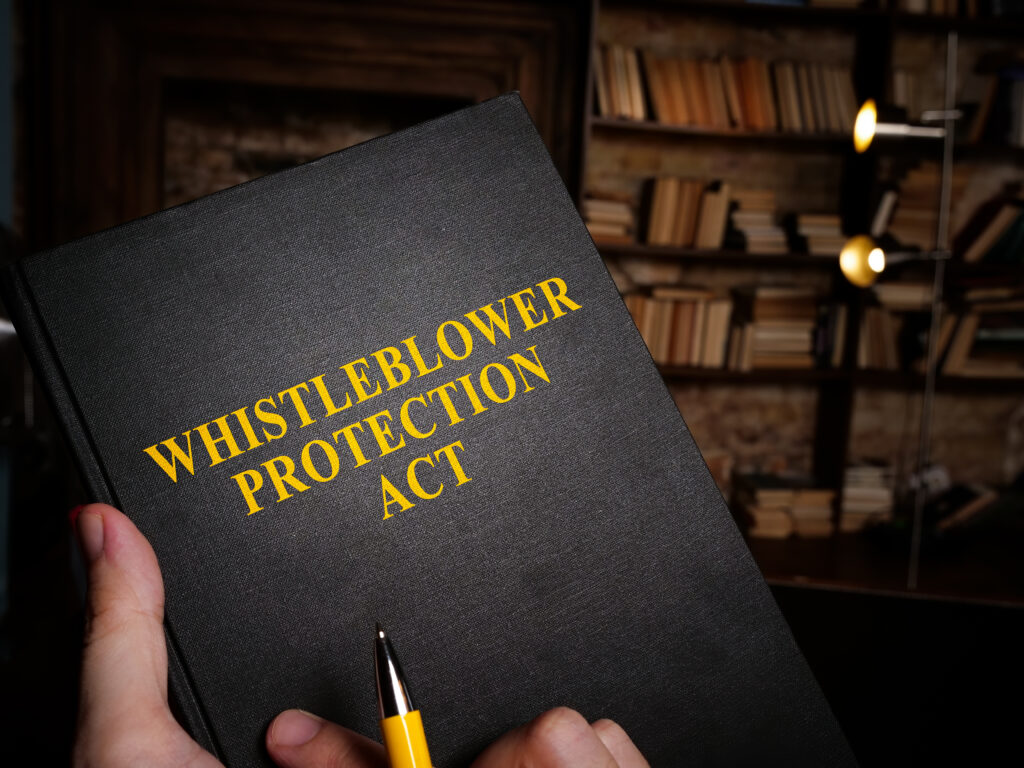
Black book labeled "Whistleblower Protection Act."

Whistleblower Protection Act (1989)

The Whistleblower Protection Act of 1989 (WPA) marked a defining moment for federal employees who risked their careers to report wrongdoing. At Barrett Johnston, we view it as a foundational piece of modern whistleblower law — one that inspired broader protections across industries, including healthcare. The WPA was designed to protect federal employees who disclose

Whistleblower Protection Act (1989) Read More »

Doctor being offered a bribe.

Anti-Kickback Statute (42 U.S.C. § 1320a-7b)

We often explain that some of the most damaging healthcare fraud doesn’t come from fake bills—it comes from improper relationships between providers and suppliers. The Anti-Kickback Statute (AKS) directly targets this kind of corruption. The AKS is a federal law that prohibits offering, paying, soliciting, or receiving anything of value to induce or reward referrals

Anti-Kickback Statute (42 U.S.C. § 1320a-7b) Read More »

Young woman physician wearing a stethoscope, writing a prescription.

Stark Law (Physician Self-Referral Law)

The Stark Law, formally known as the Physician Self-Referral Law, is one of the most important — and most complex — regulations in healthcare fraud enforcement. At its core, Stark Law prohibits physicians from referring Medicare or Medicaid patients to entities in which they (or an immediate family member) have a financial interest. For example,

Stark Law (Physician Self-Referral Law) Read More »